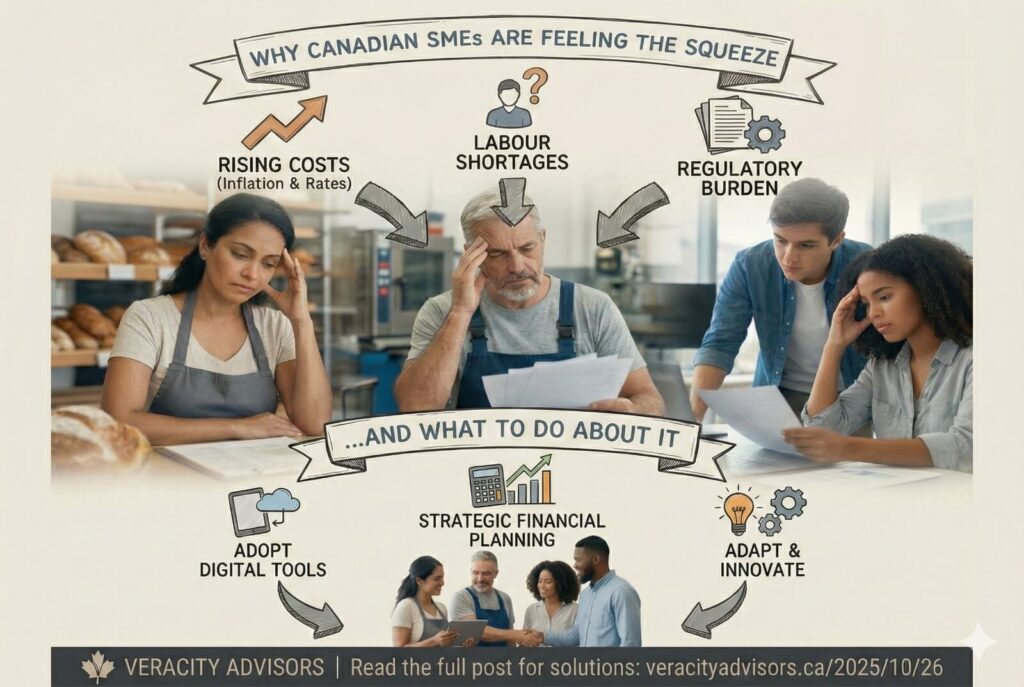
Small and mid-size businesses in Canada are facing a perfect storm right now. Tight labour, spiking material costs, rising debt burdens — it’s tough. Here’s a snippet of what’s happening and practical steps to weather the storm.
What’s Driving the Pressure
1. Labour Shortages from Immigration Pullbacks
Immigration is slowing, and that’s leaving a gap in the labour market, especially for roles that smaller firms often fill with newcomers. Without that pipeline, hiring becomes harder, wages go up, and growth stalls.
2. Housing Costs Make Hiring Harder
Housing in many regions remains unaffordable, which affects both current workers and potential new hires. When people struggle to find affordable homes, they’re less likely to relocate, and employee turnover rises — both costly for small businesses.
3. Tariffs on Raw Materials
In March 2025, Canada imposed 25% retaliatory tariffs on U.S. steel and aluminum after U.S. tariffs hit Canadian exports. (Canada)
These tariffs are forestalling supply-chain stability and driving up costs for construction firms, manufacturers, and other businesses that rely on these materials. (Canada)
4. Higher Interest Rates = More Expensive Debt
Even though the Bank of Canada has started cutting its policy rate from its peak, many businesses are still stuck carrying high-cost debt. Servicing that debt is more challenging, reducing cash flow and flexibility.
5. Rising Business Insolvencies
Business insolvencies in Canada jumped to 6,188 filings in 2024, up 28.6% from 2023 — the highest level since 2010. (ISED Canada)
In Q3 2024, insolvencies hit 1,312, a third-quarter high not seen since the Great Recession. (CAIRP)
In January 2025 alone, there were 424 business insolvencies, 7.6% more than the month before. (CAIRP)
Why SMEs Are Especially Exposed
- Thin Margins + Big Impact: Small businesses often work with tight margins. When labour costs, raw materials, or interest costs go up, it eats into profitability fast.
- Less Access to Capital: Smaller firms may struggle to secure favorable financing or build enough cash buffers.
- Vulnerability to Policy Change: Sudden policy shifts (trade, immigration) hit SMEs harder because they have less room to absorb risk.
How SMEs Can Navigate It — Real, Actionable Moves
Here are some pragmatic strategies that small to midsize businesses can adopt to stabilize, adapt, and emerge stronger:
Process Optimization
- Map & Streamline: Draw out your key workflows (sales, operations, logistics) and identify inefficiencies. Cut unnecessary steps.
- Staff Smarter: Use data on busy vs. slow periods to plan staffing (e.g., part-time workers, flexible shifts) so you’re not overpaying on slow days.
- Scenario Planning: Run monthly or quarterly “what-if” models: What if labour gets more expensive? What if material costs jump another 20%? Having a plan helps.
Automate Where You Can
- Automate Admin Tasks: Use software to handle invoicing, inventory management, and order entry. Less manual work = fewer errors + more time.
- Cash-Flow Tools: Use forecasting tools or even Excel dashboards to predict when cash will be tight, and take action early.
- Smart Supply-Chain Tech: Collaborate with suppliers to deploy systems that automatically reorder materials, reduce stockouts, and help avoid paying premium prices in crisis.
Risk Management That Works
- Hedging Strategies: Lock in pricing with key suppliers, or diversify where you source raw materials so you’re not dependent on one supplier or region.
- Cash Buffers: Set aside a cash reserve or secure a line of credit now. That way, you’re not forced to scramble when costs spike.
- Regular Risk Reviews: Set up a simple, repeatable quarterly risk review where you revisit major threats (tariffs, labour, debt) and update your plan.
- Stress Testing: Model tough scenarios regularly — for example, what happens if your costs increase 30%, or your sales drop 20% — and create response playbooks.
Use Available Support
- Government Loans: Programs like the Canada Small Business Financing Program (CSBFP) can help you access lower-cost loans.
- Advocacy: Join small business associations (regional or industry) to stay informed on policy changes (tariffs, immigration) and make your voice heard.
Final Thought
Right now, Canadian small and mid-size businesses are navigating real turbulence. Labour shortages, rising costs, and debt pressures aren’t just “challenges” — they pose existential risks for many. But businesses that lean into smart process design, automation, and risk management can turn this moment into a strategic reset.
It’s not about waiting for the storm to pass. It’s about building a business that can run through it — and come out stronger.